Redis Pub/Sub Explained - Build Real-Time Apps with Redis
Understand Redis Pub/Sub internals and use it to build real-time features like chat, notifications, and live updates.
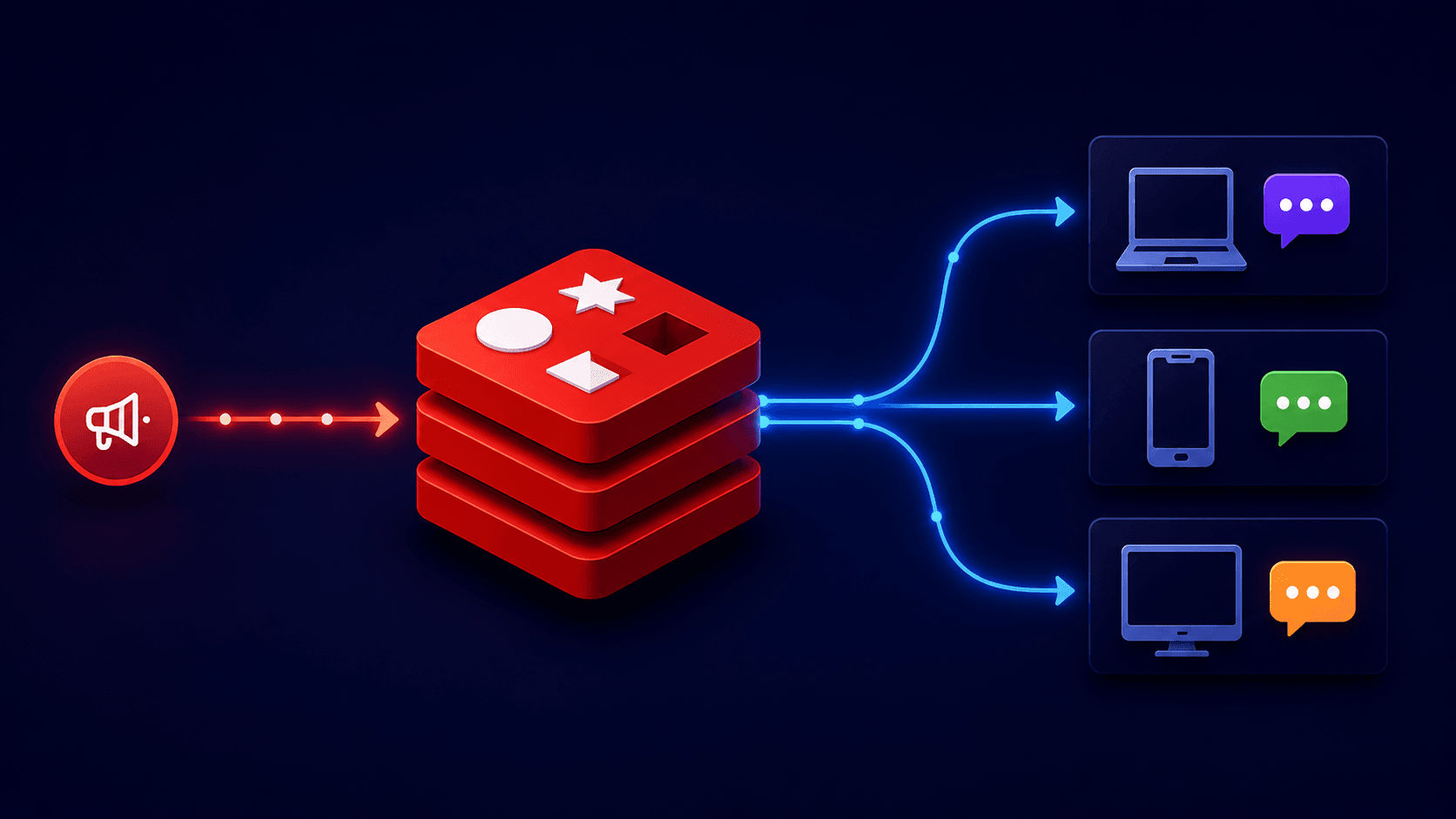
Real-time features — chat, live notifications, presence indicators, live dashboards — all need one thing in common: a way to push a message from one part of the system to another, instantly, without polling. Redis Pub/Sub gives you exactly that, with almost no setup. This article covers how it works internally, how to use it, and where it breaks down.
What Pub/Sub Actually Is
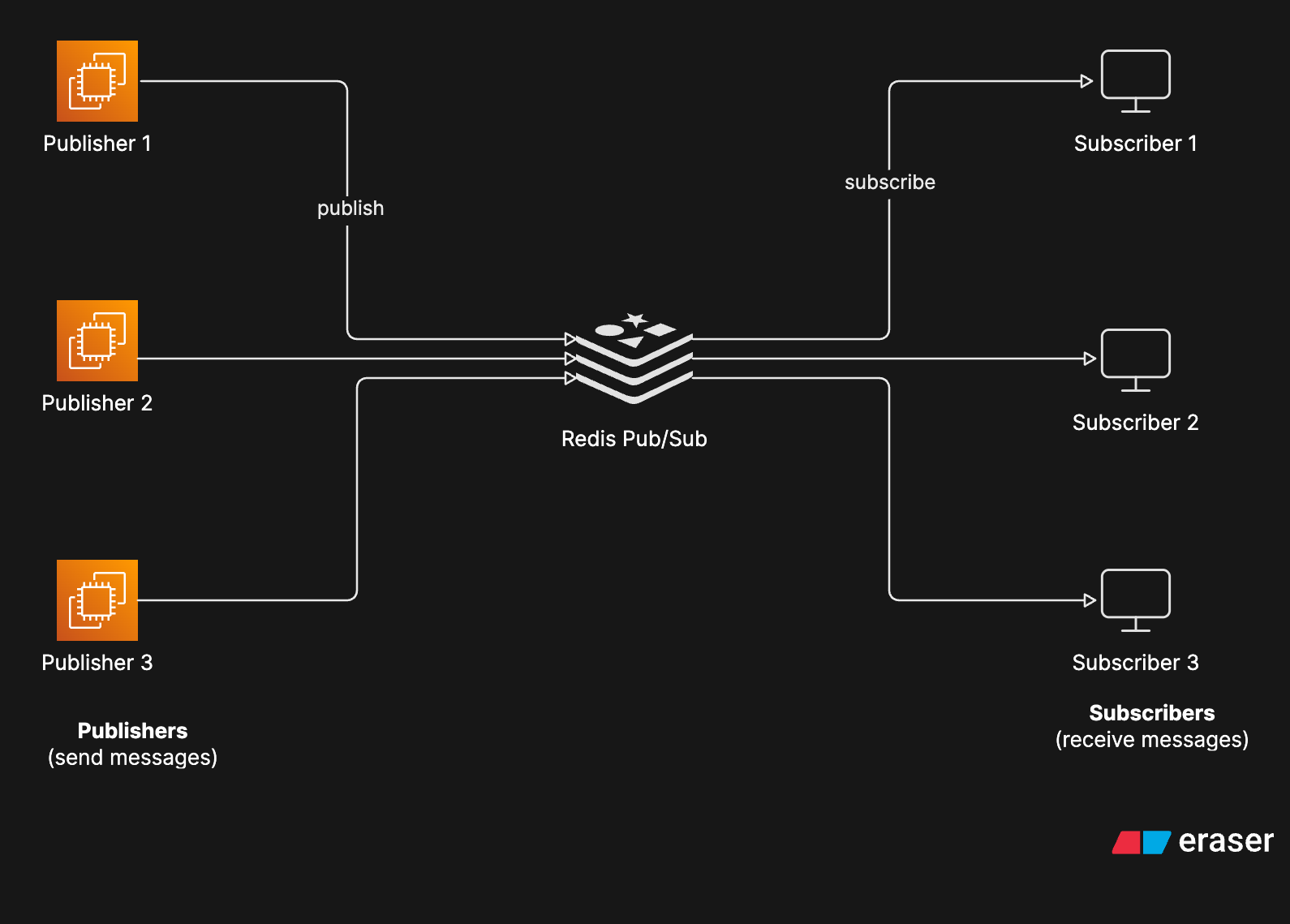
Pub/Sub is a messaging pattern with two roles:
- Publisher — sends a message to a named channel
- Subscriber — listens on that channel and receives every message sent to it
Redis sits in the middle as the broker. It doesn't store messages, doesn't queue them, and doesn't know or care who's listening. If a message is published and nobody is subscribed at that moment, it's gone — there's no replay, no persistence, no "catch up" mechanic.
This makes Pub/Sub fundamentally different from a queue. A queue holds work until a consumer picks it up. Pub/Sub is closer to a live radio broadcast — if your radio is off when something airs, you missed it.
Basic Usage
Open two terminals (or two redis-cli sessions) to see it live.
Terminal 1 — subscribe:
redis-cli
SUBSCRIBE notifications
Terminal 2 — publish:
redis-cli
PUBLISH notifications "New order received"
The subscriber terminal immediately prints the message. That's the entire mechanic — no configuration, no setup beyond a running Redis instance.
Pattern Matching with PSUBSCRIBE
Instead of subscribing to one exact channel, you can subscribe to a pattern using glob-style wildcards.
PSUBSCRIBE news.*
This matches news.sports, news.tech, news.weather — anything published to a channel starting with news.. Useful when channels are dynamically named, e.g. room.123, room.456 for per-room chat.
PUBLISH room.123 "User joined the room"
A client subscribed to room.* receives it, along with which exact channel it came from — so you can route the message correctly on the receiving end.
Building a Real-Time Chat Feature (Node.js Example)
Here's the shape of a typical setup using ioredis, paired with WebSockets (via ws or Socket.IO) to push messages to browsers.
// publisher.js — call this wherever a chat message is created
import Redis from 'ioredis';
const redis = new Redis();

export async function publishMessage(roomId, message) {
  await redis.publish(`room.${roomId}`, JSON.stringify(message));
}
// subscriber.js — runs once per server instance, fans out to connected sockets
import Redis from 'ioredis';
import { wss } from './websocket-server.js';

const subscriber = new Redis();
subscriber.psubscribe('room.*');

subscriber.on('pmessage', (pattern, channel, message) => {
  const roomId = channel.split('.')[1];
  const payload = JSON.parse(message);

  wss.clients.forEach((client) => {
    if (client.roomId === roomId && client.readyState === client.OPEN) {
      client.send(JSON.stringify(payload));
    }
  });
});
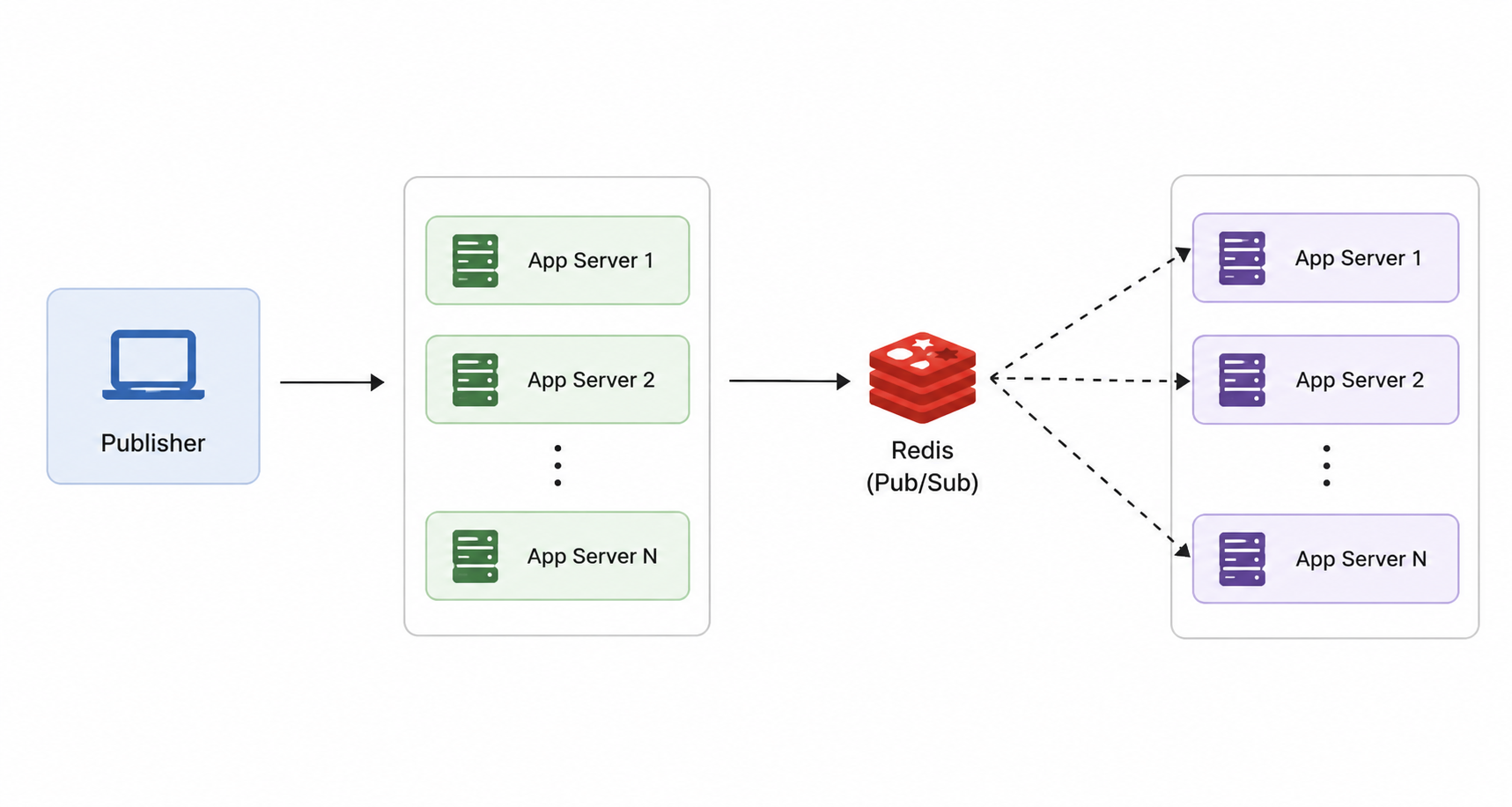
Note the split: Redis Pub/Sub connects your server instances to each other; WebSockets connect your server to the browser. This separation is exactly why Pub/Sub matters once you scale past one server process.
Why You Need This the Moment You Scale Horizontally
With a single server process, you could just hold WebSocket connections in memory and broadcast directly — no Redis needed. The problem appears the moment you run more than one instance behind a load balancer.
Browser A ──ws──> Server 1
Browser B ──ws──> Server 2
If Browser A sends a chat message, Server 1 has no way to reach Browser B — that socket lives on Server 2's memory, not Server 1's. Redis Pub/Sub solves this: every server instance subscribes to the relevant channels, so a publish from any one instance reaches all instances, which then forward to whichever sockets they're holding locally.
This exact pattern is what the socket.io-redis adapter automates if you're using Socket.IO instead of raw WebSockets.
Common Real-World Use Cases
Live notifications
await redis.publish(`user.${userId}.notifications`, JSON.stringify({
  type: 'comment',
  message: 'Someone replied to your post',
}));
Presence / typing indicators
await redis.publish(`room.${roomId}.typing`, JSON.stringify({ userId, isTyping: true }));
Live dashboard metrics
await redis.publish('metrics.orders', JSON.stringify({ count: 42, timestamp: Date.now() }));
Cache invalidation across instances
await redis.publish('cache.invalidate', 'product:123');
// every instance listens and evicts product:123 from its local cache
Limitations You Need to Know Before Relying on It
No message persistence. If a subscriber disconnects — deploy, crash, network blip — every message published during that gap is lost permanently. There's no offset, no "resume from where I left off."
No delivery guarantees. Pub/Sub is fire-and-forget. Redis doesn't retry, doesn't acknowledge, and doesn't track whether a subscriber actually processed a message.
No consumer groups. You can't have multiple workers split the load of processing messages — every subscriber gets every message. There's no concept of "only one of you should handle this."
Doesn't survive Redis Cluster resharding cleanly. In Redis Cluster, PUBLISH propagates to all nodes, but pattern-matching and channel semantics need care — check the Cluster docs before relying on Pub/Sub across a sharded deployment.
When to Use Streams Instead
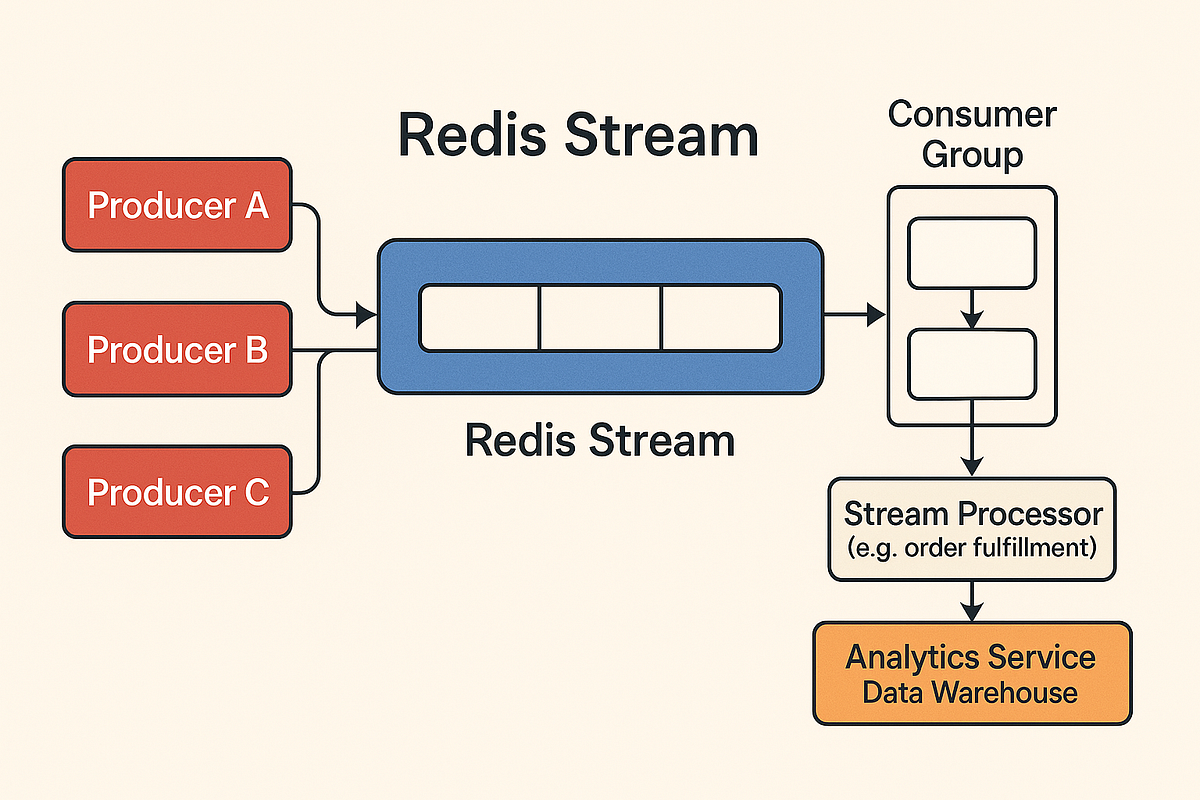
If you need any of the following, reach for Redis Streams (XADD/XREAD/consumer groups) instead of Pub/Sub:
- Messages must survive a subscriber being offline
- You need to replay history from a specific point
- You need multiple workers splitting a stream of events without duplicate processing
- You need acknowledgment / at-least-once delivery guarantees
| Need | Pub/Sub | Streams |
|---|---|---|
| Real-time fan-out to many listeners | ✅ | ✅ |
| Message durability | ❌ | ✅ |
| Replay from history | ❌ | ✅ |
| Consumer groups (load balancing) | ❌ | ✅ |
| Simplicity / lowest latency | ✅ | slightly more overhead |
A common production pattern: use Streams for anything that must not be lost (order events, audit logs), and Pub/Sub for anything ephemeral by nature (typing indicators, live cursor positions, transient UI updates) where losing a message just means the next one supersedes it anyway.
Wrapping Up
Redis Pub/Sub is the simplest real-time messaging primitive you'll find — a few commands, no persistence layer to manage, and it solves the exact problem of connecting multiple server instances so WebSocket broadcasts work correctly at scale. Its tradeoff is durability: know upfront that anything published while no one's listening is gone, and reach for Streams the moment "at least once delivery" actually matters for what you're building.